Pick Board Games

Interactive rulebook

Carcassonne Rules: Interactive Rulebook With Quick Answers

Every Carcassonne rule as a question you can search: setup, tile placement, roads, cities, monasteries, farmers, and the River and Abbot expansions. Each answer links to the official rulebook.

Official Carcassonne rulebook & supplemental sheet (PDF, English)8 pages
See priceamazon.com

This page contains affiliate links. If you buy through them we earn a commission and you pay the same.

Players
2–5
Age
7+
At the table
30–45 min
  • CarcassonneCarcassonne2–5 players · 30–45 min

Overview

Overview & goal

Copy link

Build a medieval landscape of roads, cities, and monasteries, place meeples strategically, and finish with the most points.

What is the goal of Carcassonne?

Score the most victory points by claiming and completing roads, cities, monasteries, and fields with your meeples.

Full rule · p. 3

You win Carcassonne by having the most victory points at the end of the game. Points are earned throughout the game as features (roads, cities, and monasteries) are completed, and at the end of the game for incomplete features and farmer fields.


rulebook p. 3Copy link

How many players can play Carcassonne?

The base game plays 2 to 5 players out of the box, or up to 6 players if using an expansion like Inns & Cathedrals.

Full rule · p. 2

The standard box includes meeples in five colors (red, blue, yellow, green, and black), supporting 2 to 5 players. The game plays exceptionally well at 2 players as a tight tactical duel, and up to 5 as a lively spatial contest.

rulebook p. 2Copy link

How long does a game of Carcassonne take?

A typical game takes 30 to 45 minutes, moving quickly with simple three-step turns.

Full rule · p. 3

Most games run 30 to 45 minutes. Because turns consist of drawing one tile, playing it, and optionally placing a meeple, turns move briskly with very little downtime between players.

rulebook p. 3Copy link

Components

Components

Copy link

The base game includes 72 land tiles, 40 wooden meeples in five colors, and a scoreboard to track victory points.

What comes in the Carcassonne base box?

72 land tiles (including 1 start tile), 40 meeples in 5 colors, 1 scoreboard, plus 12 River tiles and 5 Abbots.

Full rule · p. 2

The standard modern edition includes: 72 land tiles (71 with light backs, 1 with a dark back), 40 wooden meeples (8 each in red, yellow, green, blue, and black), 1 scoreboard track, and supplemental materials (12 River tiles and 5 Abbot meeples).

rulebook p. 2Copy link

How many meeples does each player get?

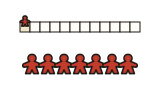
Each player receives 8 meeples of one color: 1 goes on space 0 of the scoreboard and 7 form your personal supply.

Full rule · p. 2

Each player selects a color and takes all 8 meeples of that color. One meeple is immediately placed on space 0 of the scoreboard to track victory points; the remaining 7 meeples are kept in your personal supply for placement on the map.

rulebook p. 2Copy link

How do you tell the starting tile apart from regular tiles?

The starting tile has a dark gray back, while the other 71 regular land tiles have a light-colored back.

Full rule · p. 2

Flip the tiles over: the starting tile has a distinct dark back so you can locate it instantly during setup. The other 71 land tiles feature standard light-colored backs.

rulebook p. 2Copy link

Setup

Place the dark-backed start tile in the table center, stack the remaining tiles face down, and take your meeples.

  1. Starting tile placed face up in the center of the table

    1. Starting tile

    Place the single dark-backed start tile face up in the center of the table.

    rulebook p. 2

  2. Shuffled face-down stacks of land tiles within easy reach of all players

    2. Draw stacks

    Shuffle the remaining 71 light-backed tiles and arrange them into several face-down draw stacks within reach.

    rulebook p. 2

  3. Wooden meeples in personal supplies and one meeple on the scoreboard track

    3. Meeples & scoreboard

    Place the scoreboard nearby. Each player takes 8 meeples of one color, putting 1 on space 0 and keeping 7 in supply.

    rulebook p. 2

Where does the starting tile go?

Place the single dark-backed starting tile face up in the center of the playing area before drawing any other tiles.

Full rule · p. 2

Find the single land tile with a dark back and place it face up in the middle of your playing space. All subsequent tiles drawn during the game will connect to and expand from this initial starting tile.

rulebook p. 2Copy link

How are the remaining tiles arranged?

Shuffle all 71 light-backed land tiles and stack them face down into several piles so everyone can reach them.

Full rule · p. 2

Mix and shuffle the 71 standard land tiles face down. Form several neat stacks placed conveniently around the table so that all players can reach a stack on their turn without reaching across the board.

rulebook p. 2Copy link

Where does each player place their first meeple?

Put 1 meeple on space 0 of the scoreboard track. The remaining 7 meeples stay in front of you as your active supply.

Full rule · p. 2

Place the scoreboard near the edge of the play area. Each player selects a color and places one meeple on the '0' space of the track. Your other 7 meeples sit directly in front of you.

rulebook p. 2Copy link

Should beginners use the River and Abbot on their first game?

Leave both mini-expansions in the box for your first game to master the core rules, then add them in future plays.

Full rule · p. 7

The official rules recommend playing your first game using only the base game components. Keep the 12 River tiles and 5 Abbot figures in the box until everyone is comfortable with tile placement, roads, cities, and scoring.

rulebook p. 7Copy link

Your turn

Your turn

Copy link

On your turn: draw and place a tile, optionally place one meeple on it, and immediately score any completed feature.

  1. Placing a drawn land tile matching adjacent edges

    1. Place a tile

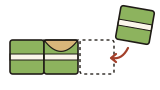
    Draw one tile from any stack and place it edge-to-edge against at least one existing tile, matching all adjacent edges.

    rulebook p. 3

  2. Placing a meeple from your supply on the tile

    2. Place a meeple

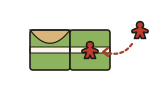
    You may place 1 meeple from your supply onto an unoccupied feature of the tile you just placed.

    rulebook p. 3

  3. Scoring completed features and retrieving meeples to supply

    3. Score points

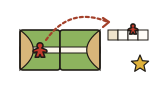
    If that tile completes a road, city, or monastery, score it immediately and return the meeples on it to their owners.

    rulebook p. 3

What is your question about?

What are the three steps of a turn in Carcassonne?

  1. Draw and place a land tile. 2. Optionally place one meeple on that tile. 3. Score any completed features.
Full rule · p. 3

Every player's turn follows three strict sequential steps: first, draw a land tile and connect it legally to the map; second, you may optionally place a meeple onto one feature of the tile you just laid; third, if any road, city, or monastery was completed, score it and retrieve meeples.

rulebook p. 3Copy link

Who takes the first turn?

The youngest player takes the first turn, and play continues clockwise around the table.

Full rule · p. 3

According to the official rules, the youngest player goes first. Afterwards, turns proceed clockwise around the table until all land tiles have been drawn and placed.

rulebook p. 3Copy link

Do tile edges have to match all touching tiles?

Yes. Every touching edge must match: road to road, city to city, and field to field. Corner-only contacts do not count.

Full rule · p. 3

A newly placed tile must match all adjacent tiles along every touching side. Roads must continue into roads, city walls must connect to city interiors or walls, and green meadows must meet green meadows. You cannot connect if any touching side clashes.

rulebook p. 3Copy link

Can you place a tile touching only at a diagonal corner?

No. A newly placed tile must touch at least one previously placed tile along an entire edge.

Full rule · p. 3

Tiles must be placed edge-to-edge. Touching an existing tile only diagonally at a corner is illegal; at least one full edge must be aligned flush against an existing tile.

rulebook p. 3Copy link

Is placing a meeple mandatory on every turn?

No. Placing a meeple is always optional. If your supply is empty or you want to save meeples, you can skip step 2.

Full rule · p. 3

Placing a meeple is entirely voluntary. If you have no meeples left in your personal supply, or if you prefer to save your remaining meeples for better future opportunities, you simply skip step 2.

rulebook p. 3Copy link

Can you place a meeple on an older tile from a previous turn?

No. You may only place a meeple on the specific tile you placed during step 1 of your current turn.

Full rule · p. 3

You can only place a meeple on the exact tile you placed during step 1 of your current turn. You can never go back and deploy a meeple onto a tile placed in an earlier turn.

rulebook p. 3Copy link

What happens if a drawn tile cannot legally be placed anywhere?

Discard that unplayable tile from the game back into the box and draw a fresh replacement tile to take your turn.

Full rule · p. 3

In the rare event that a drawn tile has no legal placement anywhere on the board (after all players verify), discard that tile from the game and draw a replacement from the stacks.

rulebook p. 3Copy link

Can you place more than one meeple on a single turn?

No. You can place at most one meeple per turn during step 2 of your turn.

Full rule · p. 3

You are limited to deploying exactly one meeple per turn during step 2. You cannot place two meeples on the same turn, even if the tile depicts multiple distinct features.

rulebook p. 3Copy link

Actions

Place a meeple as a robber on an empty road, and score 1 point per tile when both ends are terminated.

How do you claim a road in Carcassonne?

Place a standing meeple on the road segment of the tile you just placed, provided no other meeple is on that road.

Full rule · p. 3

To claim a road, place one of your meeples standing on the road section of the tile you played. That meeple is called a robber (or highwayman) and claims that connected road.

rulebook p. 3Copy link

How many points is a completed road worth?

A completed road scores 1 point for every tile that makes up that continuous road.

Full rule · p. 3

When a road is completed, the player with the meeple on it scores 1 victory point per tile in the finished road. For example, a road spanning 4 tiles scores 4 points.

rulebook p. 3Copy link

When is a road considered completed?

When both ends terminate at a village crossroad, city gate, monastery, or loop back on themselves.

Full rule · p. 3

A road is complete when both of its ends are closed off. Closed ends include city gates, village crossroads, monasteries, or when the road forms a complete closed loop.

rulebook p. 3Copy link

Can a road continue straight through a crossroad?

No. A village crossroad or intersection terminates each road segment that enters it; they do not continue through.

Full rule · p. 3

Village crossroads and intersections break roads into distinct, separate paths. A 3-way or 4-way crossroad terminates all connected road branches; none continue straight across.

rulebook p. 3Copy link

Can you place a meeple on a road that already has a robber?

No. You cannot place a meeple on any road that is already connected to another meeple of any color.

Full rule · p. 3

You may never place a meeple directly onto a road segment that is already connected to an existing meeple—whether belonging to you or an opponent.

rulebook p. 3Copy link

How can two players end up on the same road?

By placing meeples on separate unconnected road segments and joining them later with a connecting tile.

Full rule · p. 5

Two players can end up sharing a road if each placed a meeple on separate, disconnected road segments earlier in the game, and a subsequent tile connects the two sections into a single road.

rulebook p. 5Copy link

Actions

Cities

Copy link

Place a knight in an empty city, earn 2 points per tile and coat of arms upon closure, and return your meeple.

What is your question about?

How do you place a knight in a city?

Put a standing meeple inside the city segment of the tile you played, as long as that city has no other meeples.

Full rule · p. 4

Place one of your available meeples standing inside the brown city wall section of the tile you just laid. As long as no other meeple is currently in that city, your meeple becomes a knight claiming that city.

rulebook p. 4Copy link

How do you score a completed city during the game?

Each tile in a completed city earns 2 points, plus 2 bonus points for every coat of arms (shield) inside the city.

Full rule · p. 4

A completed city scores 2 points per tile comprising the city, plus an additional 2 points for every coat of arms (shield emblem) printed on those tiles. For example, a 3-tile city with 1 shield earns 8 points.

rulebook p. 4Copy link

When is a city considered completed?

When the city is completely enclosed by continuous outer walls with no gaps or empty open spaces remaining inside.

Full rule · p. 4

A city is completed the moment its outer walls form an unbroken perimeter with no open edges, and all interior spaces (if any) are completely filled with tiles.

rulebook p. 4Copy link

How many points is each coat of arms worth in a completed city?

Each coat of arms (shield emblem) adds 2 points to a completed city's score during the game.

Full rule · p. 4

Each shield icon printed on a city tile provides 2 bonus victory points when the city is completed during normal gameplay. (At final scoring, incomplete cities award only 1 point per shield).

rulebook p. 4Copy link

Can a city made of only two tiles be scored?

Yes. A small two-tile football-shaped city is completed and earns 4 points (2 points per tile), plus shields.

Full rule · p. 4

Two semicircular city segments placed against each other create a tiny completed two-tile city. This scores 4 points (2 points per tile), plus 2 points for any coat of arms on those tiles.

rulebook p. 4Copy link

How do multiple knights end up in the same city?

Players place knights in separate city sections that are subsequently joined by placing an intermediate tile.

Full rule · p. 5

You can never place a meeple into an occupied city directly. However, two or more separate city sections containing knights can be merged into a single larger city by placing a linking tile.

rulebook p. 5Copy link

Who scores the points when a merged city is completed?

The player with the most knights in the city scores all the points. In a tie, each tied player gets the full score.

Full rule · p. 5

Count the number of knights each player has in the completed city. The player with the strict majority takes all the points. If players tie for the most knights, every tied player receives the full point value.

rulebook p. 5Copy link

What happens to knights after scoring a completed city?

All meeples in that completed city are returned to their respective owners' supplies to be used again later.

Full rule · p. 4

Immediately after calculating and recording the city's score on the track, all meeples inside that city return to their owners' personal supplies. They are immediately available for placement on future turns.

rulebook p. 4Copy link

Actions

Monasteries

Copy link

Place a monk on a monastery tile, and score 9 points once all eight surrounding adjacent tiles are placed.

How do you claim a monastery in Carcassonne?

Place a standing meeple directly onto the monastery building of the tile you just placed.

Full rule · p. 4

When you place a tile showing a monastery, you may place one of your meeples standing on the monastery building. That meeple is designated as a monk.

rulebook p. 4Copy link

When is a monastery considered completed?

When the monastery tile is completely surrounded by 8 adjacent tiles (forming a full 3x3 grid of 9 tiles total).

Full rule · p. 4

A monastery is completed when it is surrounded on all sides and corners by 8 adjacent tiles, creating a complete 3-by-3 block of 9 tiles with the monastery in the exact center.

rulebook p. 4Copy link

How many points is a completed monastery worth?

A completed monastery scores 9 points: 1 point for the monastery tile itself plus 1 point for each of the 8 neighbors.

Full rule · p. 4

A completed monastery awards exactly 9 points: 1 point for the central monastery tile and 1 point for each of the 8 surrounding tiles. The monk is then returned to the player's supply.

rulebook p. 4Copy link

Can another player join or share your monastery?

No. A monastery is contained entirely on a single tile, so it can never be merged, shared, or stolen.

Full rule · p. 4

Because a monastery is confined to a single individual tile, no other player can ever place a meeple on it or merge into it. Only the player who placed the monk can score it.

rulebook p. 4Copy link

Do diagonal tiles count toward completing a monastery?

Yes. All 8 surrounding tiles—orthogonal and diagonal—must be filled to complete the 3x3 square.

Full rule · p. 4

To complete a monastery, all 8 surrounding spaces must have tiles placed in them: the 4 orthogonal edges and the 4 diagonal corners. Each neighbor placed (by anyone) contributes 1 point.

rulebook p. 4Copy link

Actions

Farmers & fields

Copy link

Lay a meeple flat as a farmer to supply completed cities for 3 points each at the end of the game.

What is your question about?

How do you place a farmer in Carcassonne?

Lay a meeple flat on a green field segment of your tile, provided no other farmer is connected to that field.

Full rule · p. 7

Place your meeple lying flat on a green grassland area of the tile you played. Laying it flat signifies that it is a farmer. You may only place a farmer if no other farmer of any color currently occupies that contiguous field.

rulebook p. 7Copy link

Do farmers ever return to your supply during the game?

No. Farmers stay on the board for the entire game and only score during final scoring after all tiles are placed.

Full rule · p. 7

Unlike robbers, knights, or monks, farmers are never returned to your supply when features are completed. Once placed, a farmer remains locked on that field until final scoring at the very end of the game.

rulebook p. 7Copy link

What creates the borders of a field?

Roads, city walls, rivers, and the open edge of the board all divide grasslands into separate distinct fields.

Full rule · p. 7

Fields are continuous stretches of grass bounded by physical barriers: roads, city walls, river streams, and the outer empty edge of the board. Follow the grass uninterrupted to trace the boundary of each field.

rulebook p. 7Copy link

Can a field cross over or under a road?

No. A road acts as a complete boundary. A tile cut in two by a road contains two separate, independent fields.

Full rule · p. 7

A road serves as an impenetrable barrier for fields. When a road runs through a tile from one edge to another, the green meadow on one side is completely separate from the meadow on the other side.

rulebook p. 7Copy link

How many points does a field score for each completed city?

Each completed city bordering the field awards 3 points to the player with the most farmers in that field.

Full rule · p. 7

At the end of the game, each contiguous field is evaluated. The player with the most farmers in that field scores 3 victory points for every completely enclosed, finished city that touches that field.

rulebook p. 7Copy link

Do incomplete cities give points to bordering fields?

No. Farmers only score for completely finished cities; unfinished cities provide 0 points to adjacent fields.

Full rule · p. 7

A city must be fully completed (enclosed walls, no gaps) to count for farmer scoring. Unfinished or open cities bordering a field award zero points to farmers.

rulebook p. 7Copy link

Can one completed city give points to two separate fields?

Yes. If a city borders multiple distinct fields, each field scores 3 points for that city for its own majority owner.

Full rule · p. 7

A single completed city can border multiple distinct fields separated by roads or terrain. Each of those separate fields scores 3 points for that city to whichever player holds the majority in that field.

rulebook p. 7Copy link

How is a tie for the most farmers in a field resolved?

If two or more players tie for the most farmers in a field, every tied player receives the full 3 points per city.

Full rule · p. 7

When two or more players are tied with the same highest number of farmers in a field, no points are split or lost: each tied player receives the full 3 points for every completed city touching that field.

rulebook p. 7Copy link

Scoring

Scoring

Copy link

Score completed features immediately during the game, and tally incomplete structures and farms at the end.

How does scoring work during the game vs at game end?

During the game, score completed roads (1/tile), cities (2/tile + 2/shield), and monasteries (9 pts). Retrieve meeples.

Full rule · p. 3

Features score as soon as they are completed: roads award 1 pt/tile, cities award 2 pts/tile plus 2 pts/shield, and monasteries award 9 pts. Meeples on completed features immediately return to hand.

rulebook p. 3Copy link

How are incomplete roads scored at the end of the game?

Each incomplete road scores 1 point for every tile in that road, exactly the same as during the game.

Full rule · p. 6

At the end of the game, meeples remaining on incomplete roads score 1 victory point for each tile that makes up that unfinished road, identical to the in-game scoring rate.

rulebook p. 6Copy link

How are incomplete cities scored at the end of the game?

Incomplete cities score only 1 point per tile and 1 point per coat of arms (half the normal completed city rate).

Full rule · p. 6

During final scoring, unfinished cities award only 1 point per tile and 1 point per coat of arms to the player holding majority. This is half the 2-point rate awarded to completed cities during the game.

rulebook p. 6Copy link

How are incomplete monasteries scored at the end of the game?

An incomplete monastery scores 1 point for the monastery tile itself plus 1 point for each tile touching it.

Full rule · p. 6

At game end, an incomplete monastery awards 1 point for the central monastery tile plus 1 point for each tile currently adjacent to it (ranging from 1 to 8 additional points).

rulebook p. 6Copy link

Do tied players split points or does everyone get full points?

Tied players never split points; each player tied for the majority receives the full point value of the feature.

Full rule · p. 5

In Carcassonne, whenever two or more players share the majority on any feature (road, city, or field), points are never divided. Each tied player scores the entire point total for that feature.

rulebook p. 5Copy link

End of the game

Game end & winning

Copy link

The game concludes when the final land tile is placed, followed by scoring incomplete features and fields.

When exactly does a game of Carcassonne end?

The game ends immediately after the turn in which the very last land tile from the draw stacks is placed.

Full rule · p. 6

The game ends immediately following the turn in which the final face-down land tile from the draw piles is placed and any in-game features completed on that turn are scored.

rulebook p. 6Copy link

In what order is final scoring resolved?

Score incomplete roads first, then incomplete cities, then incomplete monasteries, and finally farmer fields.

Full rule · p. 6

Final scoring proceeds in an orderly sequence: first, score all incomplete roads (1 pt/tile); second, score all incomplete cities (1 pt/tile + 1 pt/shield); third, score incomplete monasteries (1 pt/tile); fourth, score all fields (3 pts/completed city).

rulebook p. 6Copy link

Who wins the game of Carcassonne?

The player whose meeple has advanced farthest on the scoreboard after all final scoring is finished wins.

Full rule · p. 6

After all final scoring calculations are complete, the player whose meeple is furthest along the victory point scoreboard is crowned the winner.

rulebook p. 6Copy link

What happens if there is a tie for first place?

If players tie for the highest score at the end of the game, all tied players share the victory.

Full rule · p. 6

Under official Carcassonne rules, if two or more players end with the identical highest point total, they share the victory. There is no official secondary tiebreaker.

rulebook p. 6Copy link

Variants

The River & Abbot

Copy link

Add the River for an open starting layout and the Abbot to score gardens and recall meeples early.

How do you set up the River mini-expansion?

Place the spring tile face up, put the lake tile at the bottom, and shuffle the other 10 river tiles on top.

Full rule · p. 8

Leave the regular dark-backed start tile in the box. Place the River spring source tile face up in the center. Place the lake tile at the bottom of the River deck, shuffle the other 10 river tiles, and place them on top.

rulebook p. 8Copy link

What is the U-turn rule when placing River tiles?

You cannot place two river bend tiles in the same direction consecutively, as the river cannot double back on itself.

Full rule · p. 8

When placing river curve tiles, you may never place two bends in the same direction back-to-back. The river must flow outward and cannot make an immediate 180-degree U-turn onto itself.

rulebook p. 8Copy link

Can you place meeples on River tiles?

Yes. You can place meeples normally on roads, cities, monasteries, and fields that appear on River tiles.

Full rule · p. 8

River tiles function as standard land tiles for meeple placement. You can place robbers on roads, knights in cities, monks on monasteries, or farmers on fields shown on the River tile.

rulebook p. 8Copy link

Where can you place your Abbot piece?

Your Abbot can be placed on a monastery or a garden on the tile you just played instead of a regular meeple.

Full rule · p. 8

Each player receives 1 Abbot figure in their color. During step 2 of your turn, you may place your Abbot onto a monastery or a garden feature on the tile you just laid.

rulebook p. 8Copy link

How does the Abbot's early recall ability work?

If you don't place a meeple on your turn, you can recall your Abbot and score 1 point per surrounding tile plus itself.

Full rule · p. 8

On any turn where you decide not to place a meeple in step 2, you have the special option to recall your Abbot from the board back to your hand. You immediately score 1 point for the Abbot's tile plus 1 point for each tile currently surrounding it.

rulebook p. 8Copy link

How do gardens score at the end of the game?

Gardens score exactly like monasteries: 9 points if completely surrounded, or 1 point per tile if incomplete.

Full rule · p. 8

Gardens score identically to monasteries: 9 points when enclosed by all 8 surrounding neighbors during the game, or 1 point for the garden plus 1 point for each adjacent tile during final scoring.

rulebook p. 8Copy link

Updated 11 November 2026 · from our own catalogue